
Foods To Avoid if You Have Dentures
Regardless of what you include in your diet, remember to keep your dentures clean and well cared for.
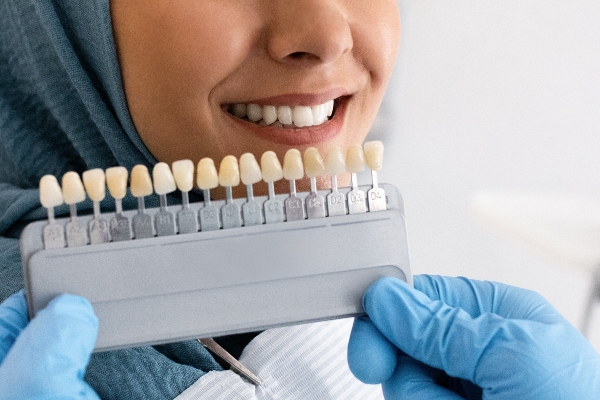
Restorative dentistry is the process of restoring damaged or missing teeth. You have had a form of dental restoration if you have ever had bridges, crowns, or fillings. Dentists want to improve or maintain your smile while preventing future dental complications. Restorative procedures need care and attention to detail. Therefore, only qualified dental professionals should perform them. You should always consult with your dentist about restorative dentistry options.
Sometimes, patients are confused by the terminology in the dental field. What sounds like something complex might be quite common. One example of this is restorative dentistry. Simple procedures, like fillings, are a form of dental restoration. Many have had them throughout a lifetime, and usually more than once. The primary restorative options that dentists use are bridges, crowns, fillings, and implants.
When dentists install a filling, they restore a tooth by replacing decay with a hardened substance. Crowns are also common and are covers applied over a tooth to preserve its structure. Bridges and implants are for more severe cases. These restorations are reserved for people with missing teeth. Bridges fill the gap between a missing tooth and a present one. On the other hand, implants are tooth replacements.
Everyone is likely to need restorative dentistry at some point in their life. The reality is that teeth begin to decay over time, even with good oral habits. Symptoms of decay can speed up if individuals do not exercise such practices. Additionally, a sudden accident can make good dental habits inconsequential. For these reasons, having a family dentist is always a good idea.
Sometimes, a need for restoration is not about hygiene but genetics. Some people are born with amelogenesis or ectodermal dysplasia. Others have a higher propensity for bruxism (teeth grinding). Bruxism is something dentists can treat but not cure. Dentistry is a combination of things inside and outside of people’s control.
Everyone is going to need restoration at some point in life. Yet, it is ideal to limit the number of times it is necessary. Furthermore, patients need to maximize the restorative treatments. People should exercise good dental habits, including oral hygiene and proper eating techniques. Both children and adults should brush their teeth twice per day. In addition, the use of floss and antibacterial mouthwash can be helpful.
Restorative dentistry can update one’s smile. A person may need this treatment for either functional or cosmetic reasons. The dentist will help the patient get the right type of restoration that will suit the person’s needs. Ideal candidates for restorative dentistry are people who are not happy with their current dental health. More dental damage leads to more negativities, such as the following:
A dental bridge can replace a tooth in the form of a pontic. This type of restorative dentistry bridges a gap left by the lost tooth. The abutment teeth on each side of the gap support the pontic. Dental crowns will go on the abutment teeth. This type of work will prevent the pontic from drifting.
Cracked, stained, and chipped, as well as oddly shaped and unevenly spaced teeth, can improve with dental bonding. Repairing the damaged teeth can prevent more dental issues, such as decay. The dentist will use composite resin to repair the tooth. Matching the bonding material’s color to the color of the natural teeth will lead to an undetectable restoration.
A dental crown or a cap can cover the damaged tooth. This type of restorative dentistry can cover the tooth that went through root canal treatment. It can hold the weakened tooth together. A crown can also protect the tooth from more damage or decay. Partial or full dentures can replace a series of teeth in a dental arch. It can replace teeth in the upper or lower arch.
Restorative dentistry can improve the way a person speaks and eats. It can protect the tooth from shifting into the dental gaps left by tooth loss. This treatment can disperse one’s bite force, which prevents jaw pain. It can also align the bite for better eating.
You will not always know whether you need tooth restoration or not. Toothaches are common indicators of such a need. Still, there are times when severe decay goes undetected by a patient. You should schedule regular cleanings with your local dentist. You will both prevent the need for restorative dentistry and catch decay in its earliest stages. The more you stay on top of your dental health, the less expensive it will be and the healthier you will be.
Request an appointment here: https://rrdentistrysofl.com or call R & R Dentistry PA at (561) 381-4744 for an appointment in our Delray Beach office.
Check out what others are saying about our dental services on Yelp: Restorative Dentistry in Delray Beach, FL.

Regardless of what you include in your diet, remember to keep your dentures clean and well cared for.

If you are considering dental veneers, the process can be daunting. Luckily, our latest blog provides all the information you need to know. From the initial consultation to the placement, we have you covered! #dentalveneers

Fix cracked, chipped, stained, and uneven teeth with dental veneers. Not only do they look natural, but they feel natural as well. Learn how #dentalveneers manage to emulate real teeth.